How do we even begin to understand the experience of the Holocaust? How do we give our students insight into something we can barely comprehend? [Redirects to the Times of Israel]

Teaching the Holocaust through Story
read more

How do we even begin to understand the experience of the Holocaust? How do we give our students insight into something we can barely comprehend? [Redirects to the Times of Israel]
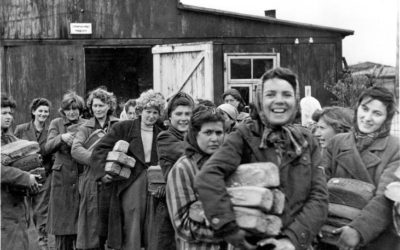
Seventy-five years ago, death camps and labor camps were liberated one by one as the Allies marched across Europe. On May 8, 1945, the armed forces of Nazi Germany surrendered to the Allies. The Jews of Europe as a people were liberated, freed from their slavery and oppression. Free to emerge from hiding; free from the threat of arrest and murder; free to be Jews again. What does it mean to be liberated? [Redirects to the Times of Israel]
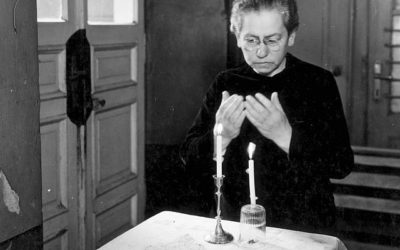
Can we still commemorate the Holocaust on Yom HaShoah in a time of social distancing? Yes! Our new service, Light from the Darkness, allows us to honor the survivors’ memories and to learn from their experiences with a ritual of remembrance that can be performed in our homes. [redirects to the Times of Israel]
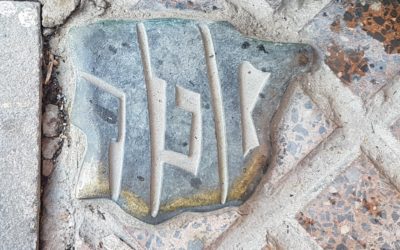
I never really understood Chanukah until I went to Spain. Standing in a church that had been a synagogue until the Jews were all either expelled or murdered, looking at the crucifix hanging where the ark had been, I understood the Maccabees in a whole new way. [Redirects to the Times of Israel]
If the only stories we learn are Anne Frank’s and Elie Wiesel’s, then we will have a very shallow understanding of the Holocaust. There is a richness and a visceral connection to the stories of Frank and Wiesel, but these are but two among a galaxy of stories that comprise the individuals who experienced the Holocaust. [redirects to the Times of Israel]
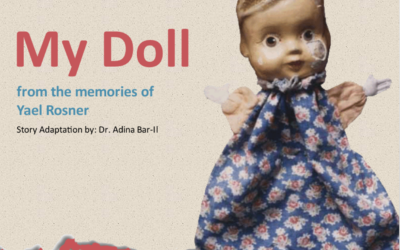
Stories are the bounty of Jewish culture. The Torah builds from our origin with history and lessons for living and dying. If the Torah is a tree of life, then storytelling is its roots. We teach our values to our children through the stories of our ancestors. What, then, do we do when we need to tell stories that are difficult to hear? How do we apply our tradition of storytelling to the story of the Holocaust? [Redirects to the Times of Israel]
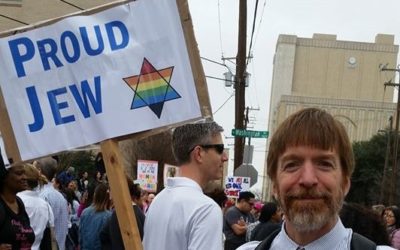
“Why do we need to teach the Holocaust?” This week, as we mark the first yahrzeit of the eleven people murdered at the Tree of Life Synagogue in Pittsburgh, I want to explore this question from a different angle, an angle of hopeful action. [Redirects to the Times of Israel]
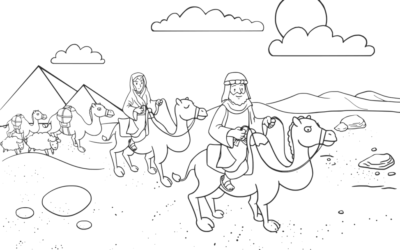
Can’t religious school be just about coloring camels from Torah portions? Do we have to teach the hard stuff? Many religious school education directors have fielded questions along these lines from concerned parents.
In classic Jewish fashion, the best answer is another question: How do we want our children to learn about the Holocaust? [redirects to the Times of Israel]

“Why do we need to teach this at all?” The Holocaust, she meant. Why do we need to teach the Holocaust in our religious school? [Redirects to the Times of Israel.]
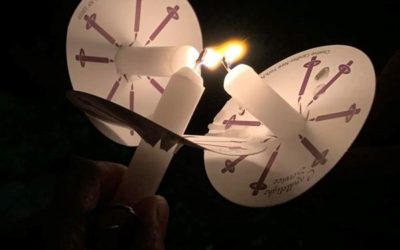
Have we built concentration camps on our border? As a Holocaust educator, I get asked this question a lot. It’s the wrong question. Asking whether they are concentration camps pushes us into extreme language that blocks conversation. [Redirects to the Times of Israel]
Sign up to get information about upcoming programs