
Lesaper – From Survivor Memory to Living Teller
“I Promise to tell Your story”
As the survivor generation ages, the question is no longer only how we preserve their stories, but how we continue to tell them.
We have very little time left.
Lesaper means “to tell” in Hebrew. The aim of the Lesaper program is to create direct connections between the next generation of storytellers and living survivors. College students and recent graduates work directly with Holocaust survivors to learn to tell their stories.
Each new storyteller takes responsibility for learning one life story carefully and faithfully, and for carrying that story forward not as history alone but as living memory.
This is not just preservation.
This is transmission.
Jump to
Lesaper in Action
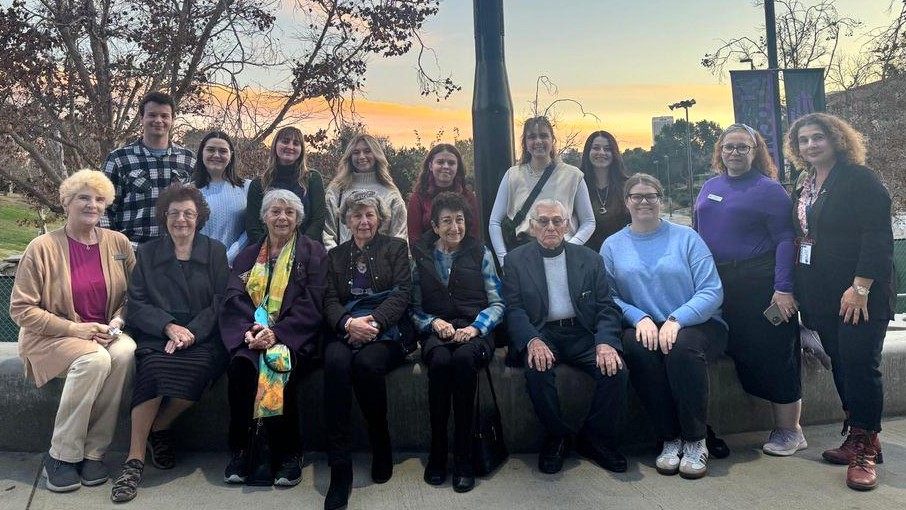
LA COHORT 3
Spring 2026
Museum of Tolerance
UCLA History Department
In process: 13 UCLA students; 13 LA-based survivors
It was totally different from how I present my own story. Very, very insightful. I’m almost emotional and I’m not an emotional person, so I want to thank you.
This is all we ask – share, share our story.
I make butterfly necklaces because from the ugly cocoon comes a beautiful butterfly – a symbol of hope for a better future.
I use my art to educate because we will never forget. And we will never let this happen again.
Be a Lesaper Partner
Lesaper cohorts are built in partnership with institutions and supported by funders who recognize the importance of carrying Holocaust memory forward.
Lesaper in Your Community
Partner with us to develop a Lesaper cohort in your community, connecting local Holocaust survivors with a new generation of storytellers who will carry their stories forward.
When we were approached, we jumped at the opportunity to say yes, because we found so many shared values and a shared commitment to ensuring that the history of the Holocaust and its enduring lessons resonate across generations.
Institutional Partners
Museums, schools, and community organizations work with us to host and shape Lesaper cohorts rooted in their communities.
Lesaper LA is made possible by the generous partnership of Holocaust Museum LA, the Museum of Tolerance, and the Public History Initiative at UCLA.

Funders & Sponsors
Your support makes it possible to train storytellers, engage survivors, and bring these stories into classrooms and community spaces.
Lesaper LA is made possible by the generous support of the Jewish Community Foundation of Los Angeles.

With Gratitude
Lesaper is made possible by the generous donation of time, guidance, and expertise by many individuals.
Interviewing Instruction
We are deeply grateful to Dr. Steve Salzberg and Ms. Genie Glucksman who volunteered their time to guide our storytellers through the practice and experience of interviewing survivors. Steve’s compassion and humor were just what our storytellers needed not only to understand what to expect but also to process what they had heard.
Local Coordination and Support
Thank you to TTS board member Erica Guerra for her extensive time and coordination support for 2024 programs.
Thank you also to Fanny Wolfowitz of HMLA, Mark Katrikh of the Museum of Tolerance, and Dr. Tawny Paul of the Public History Intiative at UCLA for believing in this program.
Additional Thanks
A special thank you to all of the survivors who have given both their time and their stories to our storytellers.
We are grateful to all those who have contributed their time, expertise, and care to make this work possible, including TTS staff members Lynne Feldman, Emily Hand, Violet Neff-Helms, Zuzana Reimer Landres, Cathy Polakoff, Jenna Price, and Karen Webber.
How the Program Works
Pairing & Partnership
Each storyteller is carefully matched with a Holocaust survivor, beginning a relationship built on trust and responsibility.
Listening & Learning
Through a series of guided interviews, storytellers listen deeply to the survivor’s experiences and how they are remembered.
Shaping the Story
With training and coaching, storytellers craft a narrative grounded in the survivor’s voice and historical accuracy.
Carrying It Forward
Storytellers begin sharing these stories and continue carrying them forward into new communities.
Pairing & Partnership
Each storyteller is carefully matched with a Holocaust survivor, beginning a relationship built on trust and responsibility.
Listening & Learning
Through a series of guided interviews, storytellers listen deeply to the survivor’s experiences and how they are remembered.
Shaping the Story
With training and coaching, storytellers craft a narrative grounded in the survivor’s voice and historical accuracy.
Carrying It Forward
Storytellers begin sharing these stories and continue carrying them forward into new communities.
Survivors
- Partner with young, passionate individuals who will carry their memories forward.
- Share their experiences through personal interviews.
- Know that their story will be shared with authenticity and historical accuracy.
Students
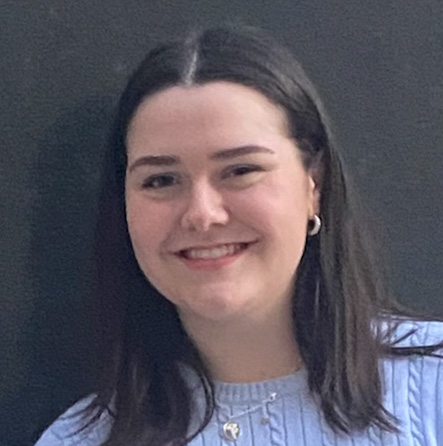
- Are 18 to 30 years old.
- Receive expert training in interviewing survivors and in developing authentic stories grounded in testimony and history.
- Act as a bridge between generations, bringing the survivor’s story to new audiences.
Communities
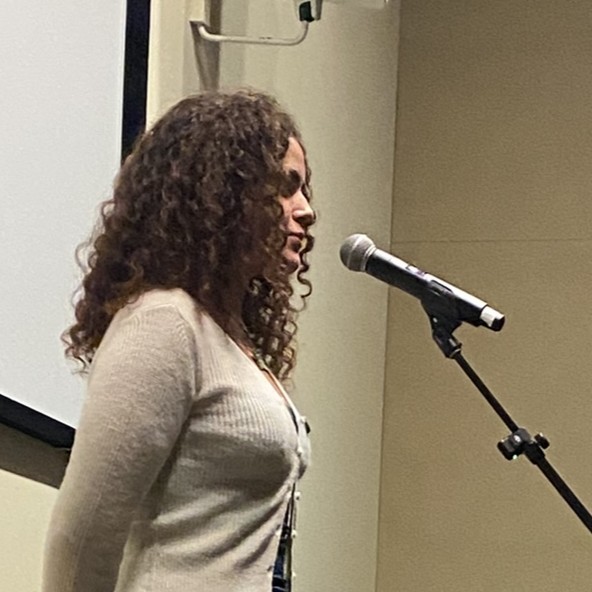
- Encounter Holocaust testimony carried forward in a living voice.
- Experience programs that create personal, human connections to history.
- Engage with testimony that deepens understanding and confronts antisemitism.
Survivors
- Partner with young, passionate individuals who will carry their memories forward.
- Share their experiences through personal interviews.
- Know that their story will be shared with authenticity and historical accuracy.
Students
- Are 18 to 30 years old.
- Receive expert training in interviewing survivors and in developing authentic stories grounded in testimony and history.
- Act as a bridge between generations, bringing the survivor’s story to new audiences.
Communities
- Encounter Holocaust testimony carried forward in a living voice.
- Experience programs that create personal, human connections to history.
- Engage with testimony that deepens understanding and confronts antisemitism.
Survivors
- Partner with young, passionate individuals who will carry their memories forward.
- Share their experiences through personal interviews.
- Know that their story will be shared with authenticity and historical accuracy.
Students
- Are 18 to 30 years old.
- Receive expert training in interviewing survivors and in developing authentic stories grounded in testimony and history.
- Act as a bridge between generations, bringing the survivor’s story to new audiences.
Communities
- Encounter Holocaust testimony carried forward in a living voice.
- Experience programs that create personal, human connections to history.
- Engage with testimony that deepens understanding and confronts antisemitism.
Impact
Lesaper is building a model for carrying Holocaust memory forward across generations, communities, and time.
2
Cohorts Completed
12
Survivors Partnered
900+
Listeners Engaged
15
Storytellers Trained
Timeline:
- Summer 2024 – Proof of Concept
- Fall 2024 – First full cohort (LA)
- Fall 2025 – Second cohort (LA)
- 2026 – Additional cohorts in development
As the Lesaper program expands, so does its reach: more survivors entrusting their stories, more storytellers trained to carry them, and more audiences encountering testimony in a living voice.
Help carry these stories forward
Lesaper connects Holocaust survivors with a new generation of storytellers who will carry their memories forward with care, responsibility, and historical accuracy.
Your support helps us train storytellers, support survivor participation, and bring these stories into classrooms and communities.
All donations are tax deductible in the United States as charitable contributions according to IRS regulations.
Teach the Shoah is a registered 501(c)(3) charity, EIN 82-4245193.
After fees, 100% of your donation goes directly to Lesaper.
After participating in the first LA cohort in 2024, sculptor Gabriella Karin was inspired to create the first piece.
She was inspired to create the second after participating in the second LA cohort in 2025.
Lesaper – Beginning of a New Era, Keeping Truth and the History Alive
Clockwise from the top: Torrie Herrington, Riley Farco, Maddi Ruiz, Libby Holden, Cooper Horton, Emily Hand, Sarah Dilatush, Brenna Metts.
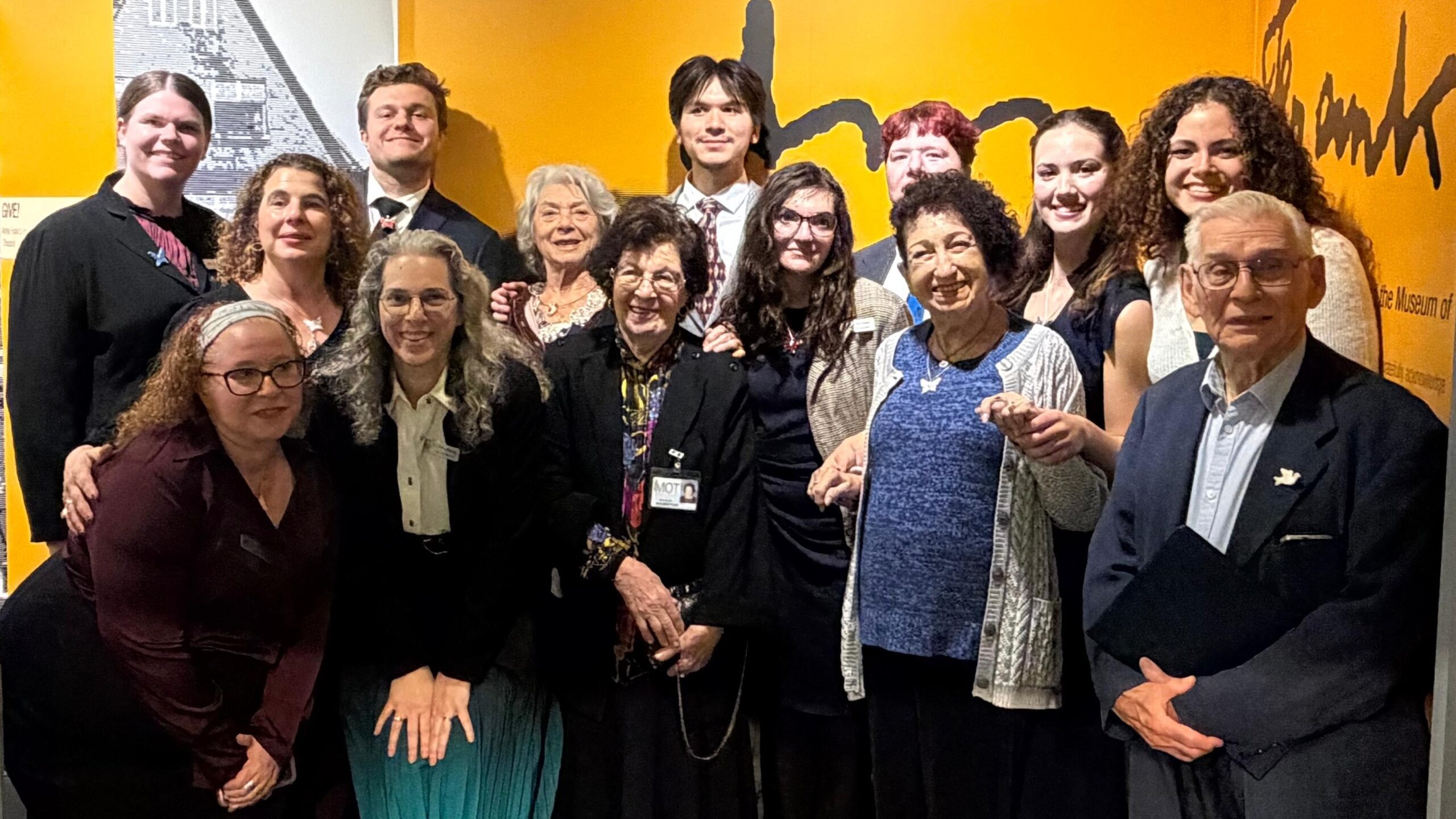
Lesaper 2 Anniversary – Speaking to the World to Keep our Memories Alive
From left to right: Sonia Chiappe with Ellie Rubin; Rowan Fripp with Gitta Morris and Monika White; Henri Slucki with Avery Epperson; Joe Samuels with Gabe Schraer; Taylor O’Neil with Gabriella Karin; Matthew Taleghani with Eva Nathanson