
Our Blog
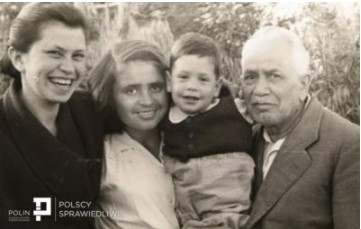
Americans, the Holocaust is not about you
How do we tell the story of the Holocaust? Here in America, the Holocaust is taught from a distinctly American point of view. The story of the Holocaust typically begins in 1938, with a sudden explosion of hatred that penetrates the American isolationism. The story ends in 1945, when brave American soldiers throw open the gates of the concentration camps. “You are free,” they cry, and, the story implies, everyone goes home again. [Redirects to the Times of Israel]
Building communities through the stories of individuals
Storytelling is an ancient art that gives voice to our values and our history. Through our stories, we build our communities. But we can only appreciate the depth of these communities when we tell the stories of the individual people who make up the community. [Redirects to the Times of Israel.]
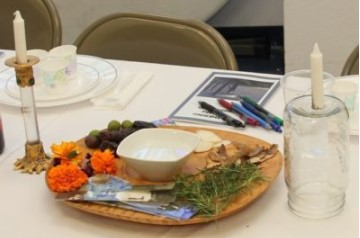
A new ritual for Yom HaShoah as the fragile window closes
We have reached a tipping point where the Holocaust is changing from an immediate, traumatic memory to community history. At this transition, we have an obligation to frame how we as a Jewish community will commemorate this event for future generations. If we do not create some sort of ritual observance, then I fear that the Holocaust will fade into history, its lessons lost. I brought this idea to a meeting of Jewish educators… [Redirects to the Times of Israel.]
Americans, the Holocaust is not about you
How do we tell the story of the Holocaust? Here in America, the Holocaust is taught from a distinctly American point of view. The story of the Holocaust typically begins in 1938, with a sudden explosion of hatred that penetrates the American isolationism. The story ends in 1945, when brave American soldiers throw open the gates of the concentration camps. “You are free,” they cry, and, the story implies, everyone goes home again. [Redirects to the Times of Israel]
Building communities through the stories of individuals
Storytelling is an ancient art that gives voice to our values and our history. Through our stories, we build our communities. But we can only appreciate the depth of these communities when we tell the stories of the individual people who make up the community. [Redirects to the Times of Israel.]
A new ritual for Yom HaShoah as the fragile window closes
We have reached a tipping point where the Holocaust is changing from an immediate, traumatic memory to community history. At this transition, we have an obligation to frame how we as a Jewish community will commemorate this event for future generations. If we do not create some sort of ritual observance, then I fear that the Holocaust will fade into history, its lessons lost. I brought this idea to a meeting of Jewish educators… [Redirects to the Times of Israel.]
Changing Times, Changing Celebrations
Sometimes it takes the wrong holiday to get us to the right one. [Redirects to the Times of Israel]
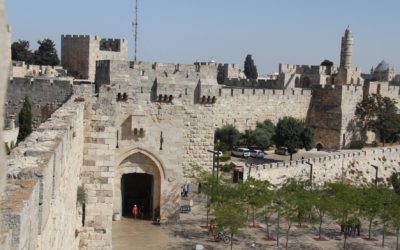
Stand at the Water Gate with Me
Our ancestors have always moved into the unknown. Their strength and stories help us as we move and grow. Consider a sunny Rosh Hashanah morning, 2500 years ago. Before the ruins of the First Temple, the men and women of Jerusalem gather at the Water Gate. [Redirects to the Times of Israel]
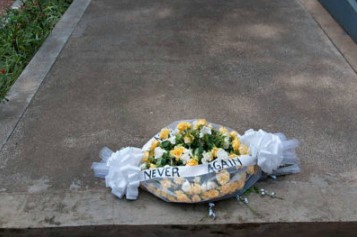
Does “Never Again” still have meaning?
Never again is the anguished cry of Holocaust remembrance, seeking to find a meaning from the suffering. But can we still say never again when genocides have happened again, and again, and again? Does the phrase still have meaning? [Redirects to the Times of Israel.]
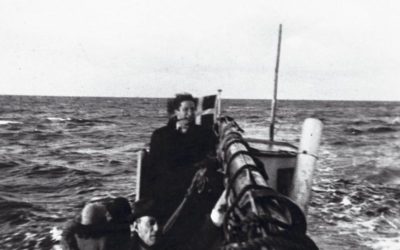
“There is no Jewish Question”
In mid-1942, the prime minister of Finland, Johann Rangell, was asked by SS chief Heinrich Himmler about the “Jewish Question.” Rangell responded that there was no Jewish Question in Finland, only respected Jewish citizens. [Redirects to the Times of Israel.]
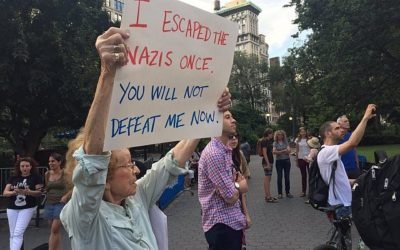
Why we should compare current events to the Holocaust
As a well-known aphorism tells us, a spurious comparison to the Holocaust devolves an argument to a standstill. But a well-placed comparison to the Holocaust can be a call-to-action, can help to highlight bias and create change. [Redirects to the Times of Israel]
Stand at the Water Gate with Me
Our ancestors have always moved into the unknown. Their strength and stories help us as we move and grow. Consider a sunny Rosh Hashanah morning, 2500 years ago. Before the ruins of the First Temple, the men and women of Jerusalem gather at the Water Gate. [Redirects to the Times of Israel]
Holocaust Education for Our Modern Conversation
Twenty minutes. That’s how much time I have to teach a group of white, Christian, Texan women about the Holocaust. One message – that’s all I’ll get. If you had time to pass along one message about the Holocaust, what would it be? [Redirects to the Times of Israel]
Subscribe for More Great Articles!
Join our mailing list to get notified about new blogs and upcoming events.