
Our Blog

How to talk to your kids about the Holocaust
“Mom, what do you know about the Holocaust?” You swallow, take a deep breath, play for time, your mind racing. “They’re not old enough to know about this,” you think to yourself frantically. “Can’t I hold on to their innocence just a little bit longer?” They’ll never be old enough. No one is old enough to really deal with the atrocities of the world. I know I’m not. But ignoring evil does not make it go away. Ignoring evil gives it space to grow. We must face evil, and we must help our children to face it. [redirects to the Times of Israel.]

Did you know (that was happening)?
Recent events have made me realize that the question “Did you know?” can be more complicated than it sounds. The story of Brett Kavanagh and Christine Blasey Ford hits close to home for me, literally. I grew up in Bethesda, Maryland. In 1982, when Christine Blasey was attending the Holton-Arms School, I was attending a public middle school a mile and a half away. [Redirects to the Times of Israel.]

For Yom Kippur: Go Set a Watchman
For the sin we have committed against You by running away from the chance to do good in order to make our lives easier. “I can’t live in a place that I don’t agree with and that doesn’t agree with me.” How many of us have had such a thought? How many of us live in neighborhoods of agreement? How many of us safely stay in our like-minded bubbles to avoid conversational conflict? [Redirects to the Times of Israel]
How to talk to your kids about the Holocaust
“Mom, what do you know about the Holocaust?” You swallow, take a deep breath, play for time, your mind racing. “They’re not old enough to know about this,” you think to yourself frantically. “Can’t I hold on to their innocence just a little bit longer?” They’ll never be old enough. No one is old enough to really deal with the atrocities of the world. I know I’m not. But ignoring evil does not make it go away. Ignoring evil gives it space to grow. We must face evil, and we must help our children to face it. [redirects to the Times of Israel.]
Did you know (that was happening)?
Recent events have made me realize that the question “Did you know?” can be more complicated than it sounds. The story of Brett Kavanagh and Christine Blasey Ford hits close to home for me, literally. I grew up in Bethesda, Maryland. In 1982, when Christine Blasey was attending the Holton-Arms School, I was attending a public middle school a mile and a half away. [Redirects to the Times of Israel.]
For Yom Kippur: Go Set a Watchman
For the sin we have committed against You by running away from the chance to do good in order to make our lives easier. “I can’t live in a place that I don’t agree with and that doesn’t agree with me.” How many of us have had such a thought? How many of us live in neighborhoods of agreement? How many of us safely stay in our like-minded bubbles to avoid conversational conflict? [Redirects to the Times of Israel]
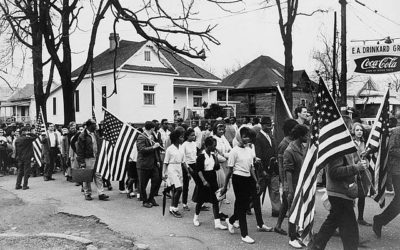
How to Teach Race Relations: Lessons from Holocaust Education
A group of 7th graders sit in a circle, white kids in the center, black and brown kids on the outside. They have been sorted by a “privilege” score assigned based on the color of their skin. The white students are trying to find a way to apologize to the students of color for the sins of their ancestors. [Redirects to the Times of Israel]
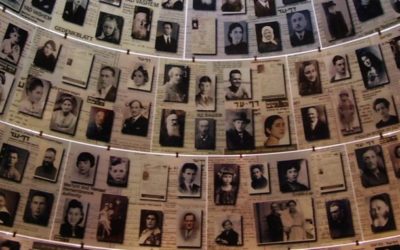
How to deal with antisemitism in our schools
“Never ascribe to malice what can be explained by ignorance, confusion, or ineptitude.” This statement was made by Rabbi Geoffrey Dennis in response to a disturbing incident that happened in Texas last week. In a teacher training in Southlake, a suburb outside Dallas, the curriculum director made a surprising statement: “Make sure that if you have a book on the Holocaust, that you have one that has an opposing…that has other perspectives.” [redirects to the Times of Israel]
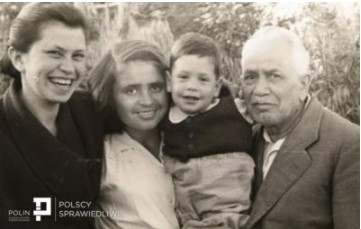
Americans, the Holocaust is not about you
How do we tell the story of the Holocaust? Here in America, the Holocaust is taught from a distinctly American point of view. The story of the Holocaust typically begins in 1938, with a sudden explosion of hatred that penetrates the American isolationism. The story ends in 1945, when brave American soldiers throw open the gates of the concentration camps. “You are free,” they cry, and, the story implies, everyone goes home again. [Redirects to the Times of Israel]

Building communities through the stories of individuals
Storytelling is an ancient art that gives voice to our values and our history. Through our stories, we build our communities. But we can only appreciate the depth of these communities when we tell the stories of the individual people who make up the community. [Redirects to the Times of Israel.]
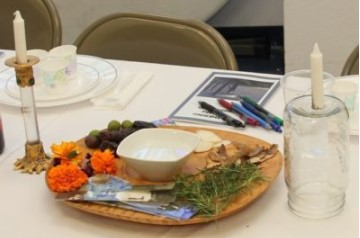
A new ritual for Yom HaShoah as the fragile window closes
We have reached a tipping point where the Holocaust is changing from an immediate, traumatic memory to community history. At this transition, we have an obligation to frame how we as a Jewish community will commemorate this event for future generations. If we do not create some sort of ritual observance, then I fear that the Holocaust will fade into history, its lessons lost. I brought this idea to a meeting of Jewish educators… [Redirects to the Times of Israel.]
How to deal with antisemitism in our schools
“Never ascribe to malice what can be explained by ignorance, confusion, or ineptitude.” This statement was made by Rabbi Geoffrey Dennis in response to a disturbing incident that happened in Texas last week. In a teacher training in Southlake, a suburb outside Dallas, the curriculum director made a surprising statement: “Make sure that if you have a book on the Holocaust, that you have one that has an opposing…that has other perspectives.” [redirects to the Times of Israel]

Changing Times, Changing Celebrations
Sometimes it takes the wrong holiday to get us to the right one. [Redirects to the Times of Israel]
Subscribe for More Great Articles!
Join our mailing list to get notified about new blogs and upcoming events.