
Our Blog
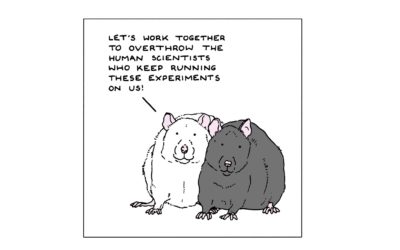
Familiarity Breeds Empathy
This Valentine’s Day, we can learn about loving our neighbors from watching how rats do it. [Redirects to the Times of Israel.]
Who will write our history?
It distresses me how long it has taken for us to realize what Emanuel Ringelblum recognized in 1940 at the very inception of the Warsaw ghetto: unless we Jews tell our story, the story of the Holocaust will be told by the perpetrators. In the experiences of many of us, the story of the Holocaust has been dominated by Nazi propaganda and Nazi thinking. [redirects to the Times of Israel.]

Let the Light Shine on: Reassessing God’s role in the Holocaust
What was God’s role in the Holocaust? Was God a perpetrator, a bystander, or a savior? Many of us have grappled with these questions: Where was God during the Holocaust? How could a God who loves us let such a thing happen? [redirects to the Times of Israel]
Familiarity Breeds Empathy
This Valentine’s Day, we can learn about loving our neighbors from watching how rats do it. [Redirects to the Times of Israel.]
Who will write our history?
It distresses me how long it has taken for us to realize what Emanuel Ringelblum recognized in 1940 at the very inception of the Warsaw ghetto: unless we Jews tell our story, the story of the Holocaust will be told by the perpetrators. In the experiences of many of us, the story of the Holocaust has been dominated by Nazi propaganda and Nazi thinking. [redirects to the Times of Israel.]
Let the Light Shine on: Reassessing God’s role in the Holocaust
What was God’s role in the Holocaust? Was God a perpetrator, a bystander, or a savior? Many of us have grappled with these questions: Where was God during the Holocaust? How could a God who loves us let such a thing happen? [redirects to the Times of Israel]
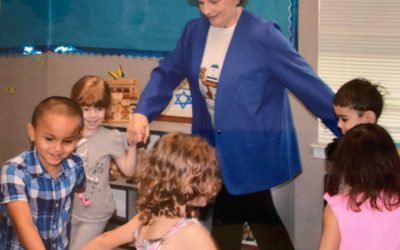
Candle & Chronicle Newsletter February 2023
January was a series of firsts for us at Teach the Shoah. In this edition of the newsletter, we spotlight storyteller and Teach the Shoah founder Violet Neff-Helms.
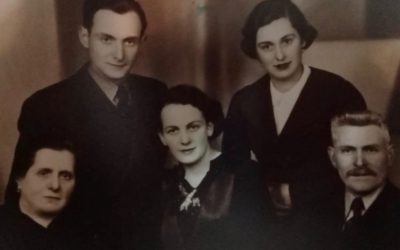
Candle & Chronicle Newsletter November 2022
Welcome to the first issue of “Candle and Chronicle,” our new Teach the Shoah newsletter. In this edition, we spotlight storyteller Leora Lazarus.
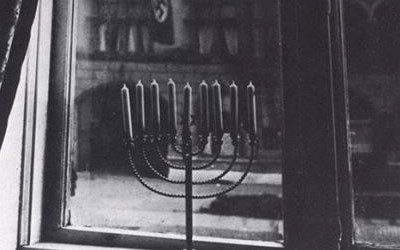
What Chanukah teaches us about Holocaust Remembrance
As Chanukah reminds us, Jews are no strangers to persecution. We have been fighting for our right to exist since the beginning of our recorded history. As we say at Passover: “In every generation, there are those who wish to destroy us.” A list of those who’ve tried would be long: Pharaoh, Amalek, Nebuchadnezzar, Haman, Antiochus, Caesar, Torquemada, to name only some. [Redirects to the Times of Israel.]
Why I teach the Holocaust in Churches
Holocaust education needs to be different in a church than in a synagogue. Although we like to think of Christians and Jews as similar, there are fundamental differences in our background knowledge of and emotional connection to the basic elements of the story of the Holocaust. These fundamental differences change how the story is heard, and therefore, how the story should be told. [Redirects to the Times of Israel.]

Love is stronger than hate
In the shadow of the 80th anniversary of Kristallnacht[1], an attack on a synagogue is particularly chilling. But this was not Kristallnacht. When the Tree of Life synagogue in Pittsburgh was attacked, people from all over poured in to help. In fact, as overwhelming as the grief and fear of the shooting was, the love in response has been almost more so. [redirects to the Times of Israel]
Candle & Chronicle Newsletter November 2022
Welcome to the first issue of “Candle and Chronicle,” our new Teach the Shoah newsletter. In this edition, we spotlight storyteller Leora Lazarus.
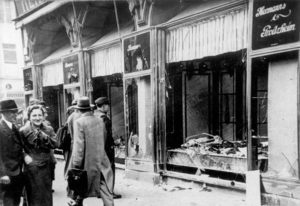
Broken Glass, Preserved Memory
Please don’t let them find out I’m Jewish. Please don’t let them find out I’m Jewish. It is November 10, 1938, and Margot Gunther (Jeremias) is riding the train to school. It’s an hour ride from her home in Hoffenheim, Germany to Heidelberg where her school is. [Redirects to the Times of Israel]
Subscribe for More Great Articles!
Join our mailing list to get notified about new blogs and upcoming events.