
Our Blog
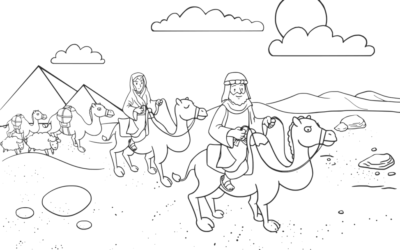
Can we just color camels? Do we need to teach the hard stuff?
Can’t religious school be just about coloring camels from Torah portions? Do we have to teach the hard stuff? Many religious school education directors have fielded questions along these lines from concerned parents.
In classic Jewish fashion, the best answer is another question: How do we want our children to learn about the Holocaust? [redirects to the Times of Israel]

The fragile window is closing: Now WE must tell their stories
“Why do we need to teach this at all?” The Holocaust, she meant. Why do we need to teach the Holocaust in our religious school? [Redirects to the Times of Israel.]

‘Never Again’ means ‘Not Now!’
Have we built concentration camps on our border? As a Holocaust educator, I get asked this question a lot. It’s the wrong question. Asking whether they are concentration camps pushes us into extreme language that blocks conversation. [Redirects to the Times of Israel]
Can we just color camels? Do we need to teach the hard stuff?
Can’t religious school be just about coloring camels from Torah portions? Do we have to teach the hard stuff? Many religious school education directors have fielded questions along these lines from concerned parents.
In classic Jewish fashion, the best answer is another question: How do we want our children to learn about the Holocaust? [redirects to the Times of Israel]
The fragile window is closing: Now WE must tell their stories
“Why do we need to teach this at all?” The Holocaust, she meant. Why do we need to teach the Holocaust in our religious school? [Redirects to the Times of Israel.]
‘Never Again’ means ‘Not Now!’
Have we built concentration camps on our border? As a Holocaust educator, I get asked this question a lot. It’s the wrong question. Asking whether they are concentration camps pushes us into extreme language that blocks conversation. [Redirects to the Times of Israel]
Tools for Creating Engaging Holocaust Commemorations for Jewish and Interfaith Audiences
The seder is the perfect model for developing a Holocaust commemoration. At the seder, we tell the story of our survival from a great tragedy ….. In a Holocaust commemoration we want to tell the story of our survival from another great tragedy. [Originally published in the Jewish Educator.]
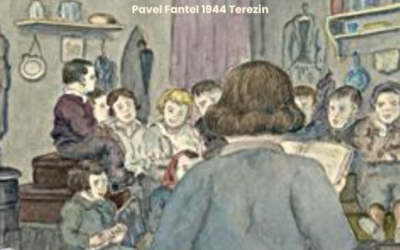
Using Storytelling to Personalize Holocaust Education in the Classroom
Learning to be a Holocaust storyteller means learning to take a primary source such as testimony, memoir, or diary, and to retell the story told in that testimony in a compelling way. [Originally published in the Jewish Educator.]

When you meet a Nazi at a gas station
“I’ve got a Nazi Iron Cross tattooed on my chest.”
We were chatting with a stranger across an unmanned gas pump, along an isolated road in rural east Texas. He had asked us, conversationally, what church we attended. This is a common conversation starter in this part of the world and did not surprise us. We’re Jewish so we attend synagogue, we replied, equally casually. That was when he told us that he had a swastika on his chest. He said it matter-of-factly, but there was a challenge in his eyes.
[Redirects to the Times of Israel]
How Should We Memorialize the Holocaust?
The Holocaust is in danger of being remembered as just another historical atrocity inflicted on the Jewish people. Traditionally, Yom HaShoah—Holocaust Remembrance Day—has been a time to listen to survivors. Soon, we will no longer be able to sit and listen to them...
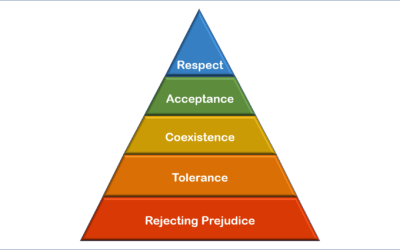
Coexist is not enough
Our holy books do not tell us to “tolerate the stranger.” They tell us to love them. [Redirects to the Times of Israel]
Using Storytelling to Personalize Holocaust Education in the Classroom
Learning to be a Holocaust storyteller means learning to take a primary source such as testimony, memoir, or diary, and to retell the story told in that testimony in a compelling way. [Originally published in the Jewish Educator.]
Candle & Chronicle Newsletter September 2023
Teach the Shoah has been growing by leaps and bounds. We are excited to announce a major milestone in that growth: Teach the Shoah has convened its first official Board of Directors.
Subscribe for More Great Articles!
Join our mailing list to get notified about new blogs and upcoming events.