
Our Blog
Changing Times, Changing Celebrations
Sometimes it takes the wrong holiday to get us to the right one. [Redirects to the Times of Israel]
Stand at the Water Gate with Me
Our ancestors have always moved into the unknown. Their strength and stories help us as we move and grow. Consider a sunny Rosh Hashanah morning, 2500 years ago. Before the ruins of the First Temple, the men and women of Jerusalem gather at the Water Gate. [Redirects to the Times of Israel]
Holocaust Education for Our Modern Conversation
Twenty minutes. That’s how much time I have to teach a group of white, Christian, Texan women about the Holocaust. One message – that’s all I’ll get. If you had time to pass along one message about the Holocaust, what would it be? [Redirects to the Times of Israel]
Changing Times, Changing Celebrations
Sometimes it takes the wrong holiday to get us to the right one. [Redirects to the Times of Israel]
Stand at the Water Gate with Me
Our ancestors have always moved into the unknown. Their strength and stories help us as we move and grow. Consider a sunny Rosh Hashanah morning, 2500 years ago. Before the ruins of the First Temple, the men and women of Jerusalem gather at the Water Gate. [Redirects to the Times of Israel]
Holocaust Education for Our Modern Conversation
Twenty minutes. That’s how much time I have to teach a group of white, Christian, Texan women about the Holocaust. One message – that’s all I’ll get. If you had time to pass along one message about the Holocaust, what would it be? [Redirects to the Times of Israel]
Candle & Chronicle Newsletter August 2025
Teach the Shoah is an online Holocaust education nonprofit that specializes in training people to tell testimony-based stories of the Holocaust. Why do we do this? To build personal connections to the stories of the Holocaust. Because we believe that EMPATHY is our most powerful tool against HATE. [redirects to MailChimp]
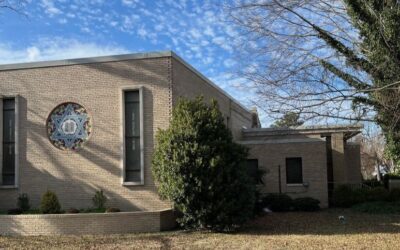
Speaking At My Childhood Synagogue
The date was April 27, 2014. The place, Beth Israel Synagogue in Salisbury, MD, the synagogue that our family had belonged to since moving to Salisbury in 1950, the year before I was born. The event was the annual Yom HaShoah program, which my father, who survived the...
Never Again Means Not Now: Looking Inward Edition
Anger. Sadness. Fear. Recognition. I would not presume to speak for the community of color. But these are some of the things I would be feeling if this were happening to the Jewish community. [Redirects to the Times of Israel]

Teaching the Holocaust through Story
How do we even begin to understand the experience of the Holocaust? How do we give our students insight into something we can barely comprehend? [Redirects to the Times of Israel]
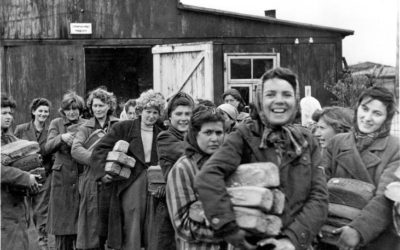
On the meaning of liberation, for the 75th anniversary of V-E day
Seventy-five years ago, death camps and labor camps were liberated one by one as the Allies marched across Europe. On May 8, 1945, the armed forces of Nazi Germany surrendered to the Allies. The Jews of Europe as a people were liberated, freed from their slavery and oppression. Free to emerge from hiding; free from the threat of arrest and murder; free to be Jews again. What does it mean to be liberated? [Redirects to the Times of Israel]
Speaking At My Childhood Synagogue
The date was April 27, 2014. The place, Beth Israel Synagogue in Salisbury, MD, the synagogue that our family had belonged to since moving to Salisbury in 1950, the year before I was born. The event was the annual Yom HaShoah program, which my father, who survived the...
Breaking the Silence
I’ve been telling other people’s stories in writing for more than 40 years. Telling my own in person… I wasn’t sure about that at all. “You can write it and read it,” I told myself, having already signed up for Teach the Shoah’s class. That was before I realised what...
Subscribe for More Great Articles!
Join our mailing list to get notified about new blogs and upcoming events.