
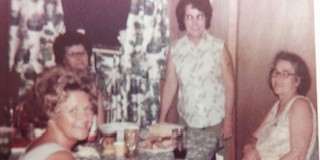
When I was very young, I learned that if I sat quietly, I could listen undisturbed to my mother and aunts telling stories from their childhoods. As I heard names I recognized and places I had seen, I sat fascinated at the revelations.
People I knew as sweet old ladies had once been rude and wild teenagers. I learned of families formed and broken, children lost to disease, cousins who went to war and never came home. I’ve never been addicted to soap operas, but these stories held me in their spell. Each unraveled tale made the people spoken of come to life for me – their work, their talents, their sense of humor, the kindnesses shown, the secrets taken to their graves.
With this background, I was excited to be part of the storytelling classes when my Teach the Shoah co-founder Deborah Fripp introduced us to storyteller Jennifer Rudick Zunikoff. Through the tools Jennifer laid out for us, we were taught to listen differently to a story – that it was in the listening that the telling grew.
I am more convinced today than when I began of the need for and importance of this method of teaching. Storytelling is powerful because it triggers the release of oxytocin and dopamine, hormones known to enhance our sense of empathy for others and to boost motivation. This is one of our goals as an organization – to motivate people to be not just passive hearers but positive doers.
As Holocaust educators, the stories we share are not easy ones to tell. Often painful to hear, they open a page of history that many tried to bury long ago. Simply speaking the word Holocaust can cause a strong emotional response.
We do not do this simply to unnerve or upset people. We share these stories so we can be the voice of those now silenced by time – so their lives will not be forgotten. We verbally open the door on their world, not just to reveal their suffering but to show their living. As my family stories helped me see relatives as ‘real’ people, so our storytelling advances the knowledge that once there was a people who faced the world they lived in with courage, uncertainty, and perseverance.
Being a Holocaust storyteller is an honor and a privilege.
Thank you, Violet. This is beautiful.