
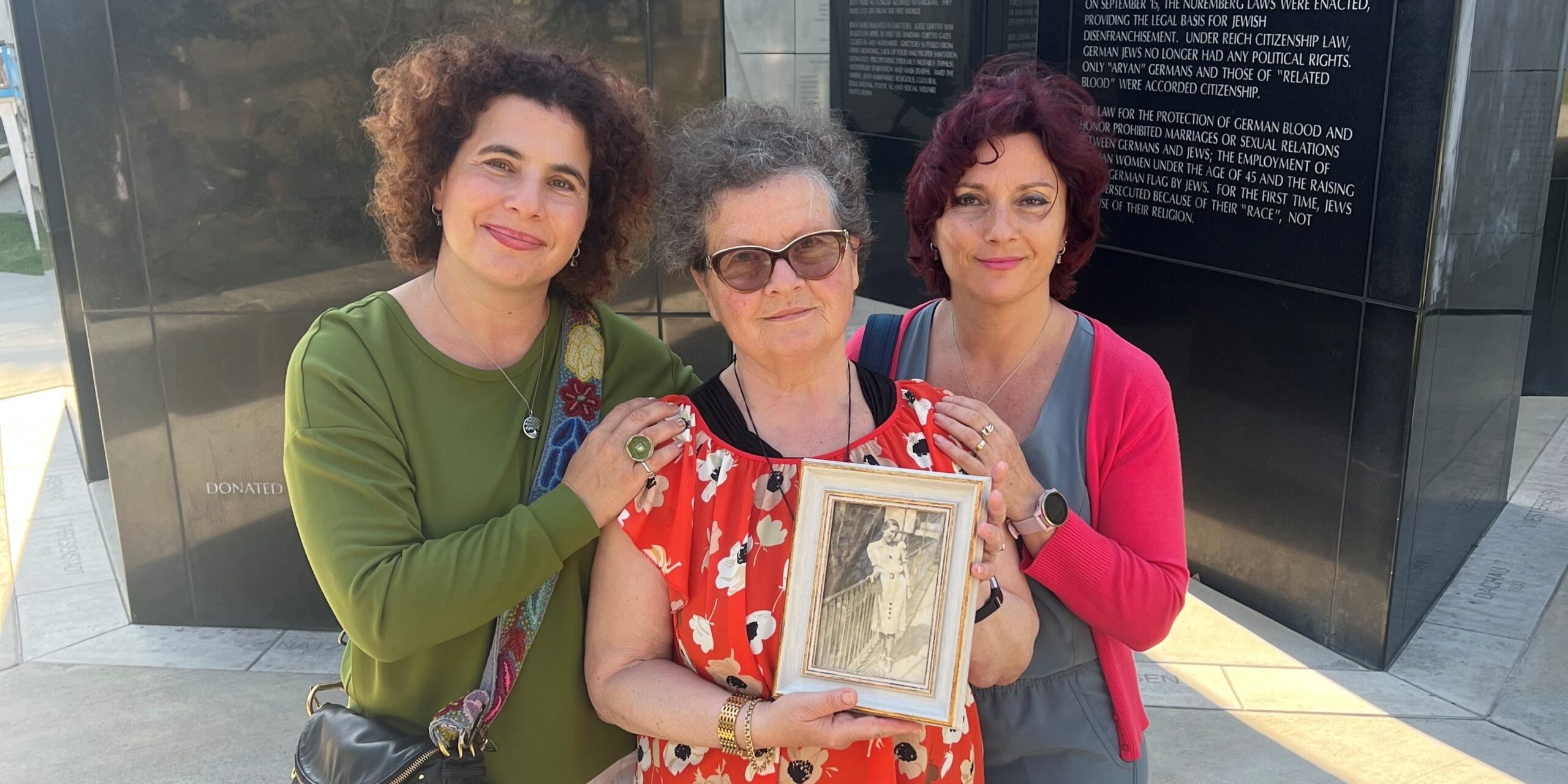
Growing up in Czechoslovakia (now Slovakia), I was always mesmerized by a black and white portrait in my maternal grandparents’ bedroom. It showed a gorgeous young woman with her head tilted slightly toward her shoulder, her subtle smile brightening her face. This was my grandmother’s beloved older sister Magdalena. Everyone called her “Dushika” (“little soul”). Even as a little girl, I remember my grandmother crying with her hands covering her face, mourning her beloved sister whom she lost so tragically.
What I knew as a child was limited. Magda was my grandmother’s favorite sister who died in Auschwitz. My beautiful mama was named after her. Only later did I learn the full story. Magdalena was one of 999 young single women on the very first transport to Auschwitz from the Slovak State in March 1942. They were ages 16 to 36 — exactly the age of my own daughters now.
As a Holocaust educator and storyteller in Los Angeles, my family story has often inspired my work. Three years ago, while preparing an exhibit at Holocaust Museum LA, I researched the other women on that first transport — their connections, dreams, and bonds of sisterhood. My sources included original artifacts, testimonies, and interviews I conducted or witnessed.
During this research, I discovered Teach the Shoah. I took their storytelling classes and was hooked. My mentor, Jennifer, offered me a chance to be a featured storyteller in January 2024. Working on and sharing Dushika’s story was transformative. It allowed me to connect more deeply to my family story and learn how to share it meaningfully with others.
The moment I finished, relief and pride flooded my body. “I brought her story alive! I remember her in a way she would feel seen!” Hearing the audience’s appreciation, I understood the power a well-told story can have. We are all storytellers, but our voices need to be discovered and sharpened.
Deep storytelling can shape us into better listeners and make us empathize on levels that statistics never can. It creates community, serves as a bridge without judgment, and conveys messages people might otherwise resist hearing.
When an opportunity arose to join LeSaper: From Survivor Memory to Living Teller, I became a bridge-maker and survivor coordinator. Witnessing students become storytellers and ambassadors of survivors’ stories was tremendously powerful. Their empathy and commitment left a lasting impression on all of us, including the survivors themselves. The survivors know that their stories will be preserved and alive for the next generation.
Today I have not only a photograph of Magda Altmann but also pride in our family’s story of memory and resilience. I honor our memory with joy and community-building on two continents, bridged by family ties, love, and the strong Jewish values my grandmother would be unshakably proud of.
0 Comments