
One of the things I find most rewarding as an educator is when a student finally “gets it” – that moment when the eyes light up with understanding, the face animates, and the person becomes truly engaged in the lesson. This holds true whether I am teaching language arts, social skills, or shapes, but it is especially true when I am teaching about the Holocaust.
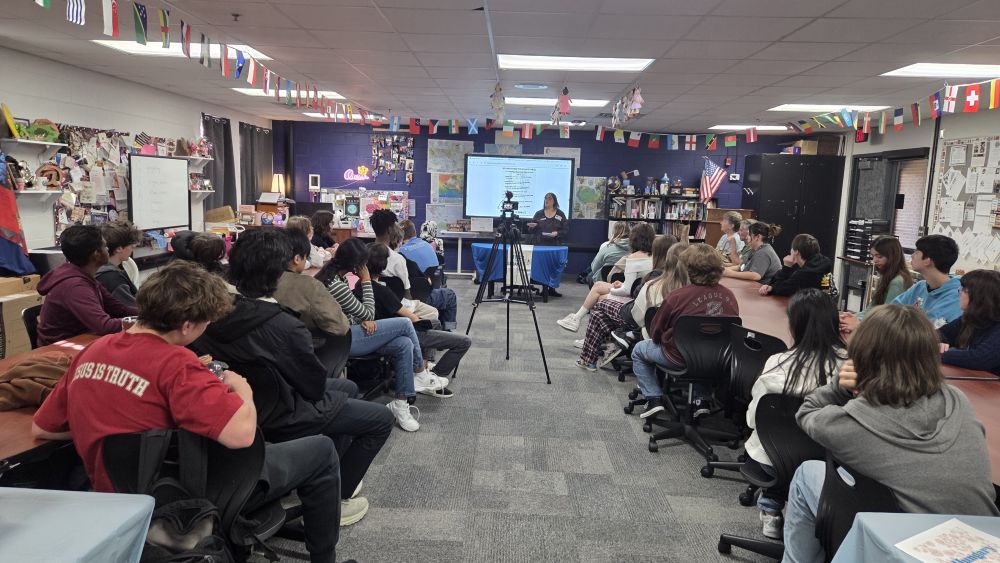
Three Teach the Shoah storytellers recently presented stories about resilience and survival to a nearby high school. We tied in a lesson about the variety of cultures within Judaism. This presentation was meant to supplement current learning about the Holocaust. It served that purpose, but it also became much more.
As we told our stories, a room full of eyes focused on us. When we discussed Jewish cultures, students made connections between the cultures we discussed and their own. When we got to the Q&A, eyes lit up, faces became animated, and lessons were learned.
The students had been learning the concept of Upstanders, people who speak up when they see bullying or bigotry, people who do not just stand by and let such behavior continue unchallenged. This was part of our goal for this presentation, and I believe we accomplished that goal.
One student, after hearing a story about a teller’s mother aboard the MS St. Louis, asked if the knowledge of what his mother survived influenced his feelings about immigration in the present. This led to a discussion about how such things could be prevented from happening again. After I told a story about Olympic swimmer Eva Szekely, another student commented that she had always known the Holocaust was “a bad thing,” but it was only when she heard history relayed to her using a first-person perspective that she truly understood the enormity of what had happened. Only now did she truly empathize with those who went through the Shoah. For these and many other students, history became something real, something relatable, and the reasons for learning it were suddenly obvious. This is how being an Upstander starts – with an open mind and heart.
Survivors of the Holocaust have a saying, “The best revenge is grandchildren.” After this presentation, I would like to amend that: “The best revenge is grandchildren and those who call them ‘friend’.” As we honor International Holocaust Remembrance Day and contemplate the place Jews occupy in the modern world, isn’t it nice to know the Righteous of the future are learning and appreciating the lessons of the past?
What a wonderful and timely program! Yasher koach to all involved.