
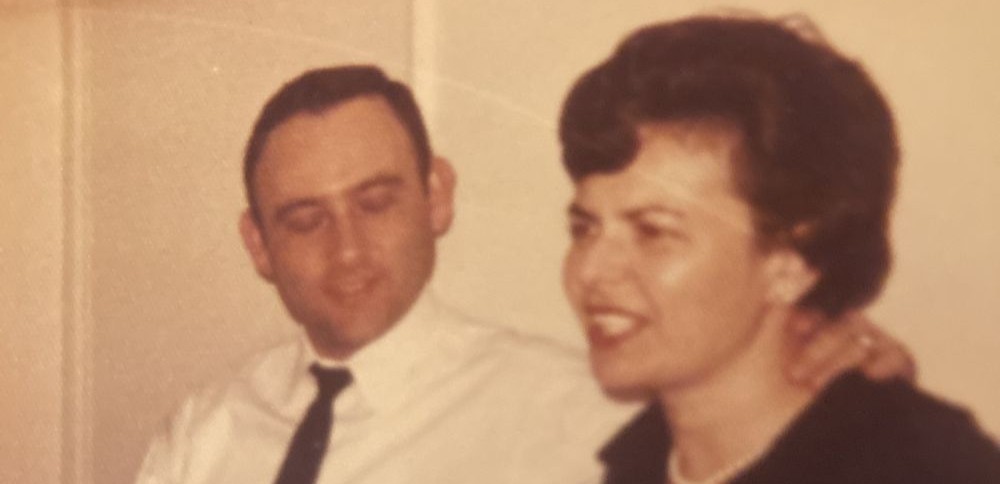
“There are two things they can never take from you — your intelligence, and your memories.”
Aside from this admonition, I received precious little of my father’s story during his short lifetime. He never spoke outright of his experience as a child in Europe during the Holocaust.
My mother’s sharp warnings — that I must not choose German as my foreign language in school; that I must not show my dad my faded batik artwork (she feared it would evoke memories of camp prisoners’ clothing); that I must not expect certain foods to be served when he was in the house (he could not tolerate the odor of grilled lamb chops); that I must not ask for certain breeds of dogs for pets (e.g. shepherd or rottweilers) — hinted at the severity of his trauma. They were enough to stifle my questions and to whet my curiosity.
In November 1972, when I was 15 and he was 43, he died by suicide. My longing for his story mingled with my deep feelings of loss. It set me on a lifetime pursuit of a meaning for his suffering and an understanding of his choice to end his life.
It wasn’t until I was introduced to Teach the Shoah in July 2024 that I was able to fully embrace his legacy. I was able to take a “deep dive” into genealogy research, to reach out to family memory-keepers, and to begin to tell his story.
I will always feel profound gratitude to my Teach the Shoah guides and its remarkable storycrafting process for my emerging skill as a storyteller and for bringing my father back to me, with all of the joy, pain, and wisdom that his story contains.
Roberta, I just want you to know that the paragraph about what brought anxiety and upset to your dad speaks volumes about what he went through, and it’s profound effect on you and your entire family. But the quote from your dad, that is like gold. It’s an empowering sentiment, and shows not only the kind of man he was, but the kind of woman he raised you to be. I think he would be very proud of you. Thank you for sharing your story.